What if your Legacy IBM i System could explain itself?

Modernizing an IBM i application is rarely about rewriting code. For most organizations, success depends on first understanding decades of accumulated business logic, hidden dependencies, and architectural decisions that were never documented.
Many IBM i environments have evolved continuously for 30 or 40 years. They contain thousands of RPG and CL programs, database files, service programs, stored procedures, triggers, and interfaces that support critical business operations. While these systems remain reliable, their complexity often makes modernization expensive and risky. This is where Sitemule Blueprint changes the equation.
"Without reliable answers, modernization projects rely on assumptions rather than facts."
Modernization Begins with Understanding
A common misconception is that modernization starts with converting RPG to another language or replacing green-screen applications with graphical interfaces. In practice, successful modernization starts much earlier.
Before changing a single line of code, development teams need answers to questions such as:
-
Which applications use this business rule?
-
What happens if this database field changes?
-
Which interfaces depend on this program?
-
Is this module still in use?
-
Can this component safely be replaced?
-
Which business processes will be affected?
Without reliable answers, modernization projects rely on assumptions rather than facts.
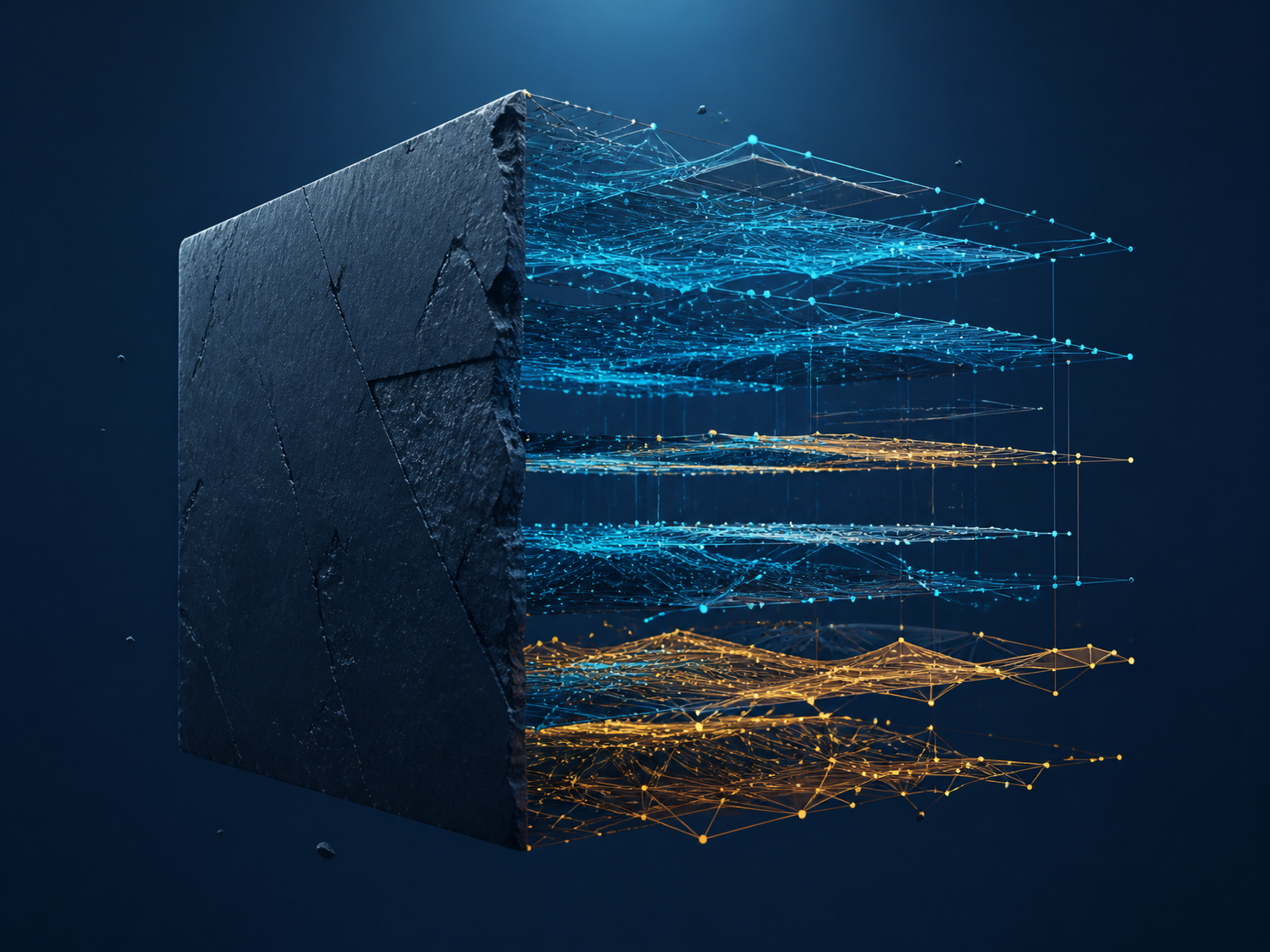
Sitemule Blueprint provides those answers by building a complete structural model of the IBM i application landscape. Instead of manually tracing code across thousands of objects, developers gain immediate visibility into relationships, dependencies, execution flows, and embedded business rules. It is like having the original system architect available to explain exactly how the application works.
Building a Reliable Foundation for Modernization
Legacy applications typically contain decades of enhancements implemented by many different developers. Documentation is often outdated or missing entirely, leaving critical knowledge stored only in the experience of senior employees.
Blueprint transforms this situation by automatically analyzing RPG (all generations), CL programs, DDS and SQL database definitions, Service programs and modules, stored procedures, Triggers, Views, Physical and logical files, IFS source code, Git repositories, and Object dependencies across the entire IBM i environment.
The result is a living architectural model that accurately reflects the current system rather than documentation written years ago. This foundation allows modernization initiatives to begin with confidence instead of uncertainty.
"It is like having the original system architect available to explain exactly how the application works."
Supporting Every Stage of Modernization
Blueprint supports modernization long before code conversion begins and continues throughout the entire project lifecycle.
Assessing the Existing Application
The first challenge in any modernization project is understanding what actually exists.
Blueprint identifies Core business applications, Shared components, Reusable services, Dead or obsolete code, High-risk dependencies, frequently used database objects, and Cross-application relationships. This allows architects to identify modernization candidates based on objective analysis rather than assumptions.
Defining Modernization Boundaries
Large IBM i environments cannot usually be modernized all at once. Blueprint helps divide complex systems into logical business domains by visualizing application boundaries and dependencies. Teams can identify which components belong together and which can be modernized independently. Instead of treating the entire application as one monolithic system, Blueprint reveals manageable modernization units.
Performing Reliable Impact Analysis
Every modernization effort introduces change. Whether replacing a database structure, exposing APIs, introducing SQL, refactoring RPG, or moving functionality into microservices, understanding downstream impact is essential. Blueprint automatically identifies every affected Program, Module, File, Table, Service Program, Trigger, Stored Procedure, and Calling application.
This enables developers to estimate work accurately, design appropriate test plans, and significantly reduce production defects.
Accelerating Refactoring
Refactoring legacy applications without understanding dependencies often creates new problems.
Blueprint exposes:
-
Program call hierarchies
-
Data usage
-
Object relationships
-
Embedded business rules
-
Runtime dependencies
Developers can safely simplify code, remove redundant components, consolidate duplicated logic, and introduce cleaner application structures while maintaining business functionality.
Supporting API Enablement
Many IBM i modernization projects focus on exposing existing business logic through REST APIs.
Before services can be exposed, organizations need to understand which programs implement the required business functions, which files they update, which programs they call, and which side effects they trigger. Blueprint provides this visibility, allowing architects to identify suitable service boundaries and expose business functionality without unintentionally affecting unrelated processes.
Preparing for Database Modernization
Organizations often migrate from DDS-defined databases toward SQL-based designs.
Blueprint helps identify:
-
All consumers of existing files
-
Programs affected by schema changes
-
Database dependencies
-
Shared record formats
-
Cross-reference relationships
Instead of discovering issues during testing, teams understand the full impact before implementation begins.
Enabling Incremental Modernization
Complete application replacement is rarely practical. Most successful IBM i modernization initiatives follow an incremental approach where existing functionality is gradually improved while the business continues operating.
Blueprint supports this strategy by allowing organizations to:
-
Modernize one business area at a time
-
Replace individual components safely
-
Validate dependencies before deployment
-
Document every architectural change
-
Reduce modernization risk throughout the project
This allows continuous modernization without disrupting daily operations.
Preserving Business Knowledge
Perhaps the greatest modernization risk is losing business knowledge rather than technical knowledge. Many critical business rules exist only within legacy source code or in the experience of long-serving developers.
Blueprint extracts and documents these relationships, making business logic visible, searchable, and understandable across the organization. Instead of relying on tribal knowledge, every developer works from the same trusted architectural model.
"Instead of relying on tribal knowledge, every developer works from the same trusted architectural model."
AI-Ready Modernization
Blueprint is also built for the next generation of AI-assisted software engineering. Through support for the Model Context Protocol (MCP), Blueprint exposes its complete application graph - including programs, files, tables, stored procedures, triggers, and their relationships - to generative AI assistants and agents such as ChatGPT, Gemini, Claude, and Copilot.
Instead of asking AI to interpret isolated source files, organizations can give these agents a complete understanding of the application's architecture, grounded in fact rather than guesswork. This unlocks AI-assisted impact analysis, code exploration, documentation generation, modernization planning, and developer guidance - all based on accurate structural information instead of fragmented context.
Practical Modernization Scenarios
Organizations use Blueprint throughout real modernization projects, including:
-
Converting DDS databases to SQL while understanding every dependent program.
-
Refactoring large RPG applications into modular service programs.
-
Identifying reusable business logic before exposing REST APIs.
-
Preparing green-screen applications for modern web front ends.
-
Removing obsolete code safely by identifying unused components.
-
Planning phased modernization projects with clear architectural boundaries.
-
Supporting mergers and acquisitions by rapidly understanding inherited IBM i applications.
-
Documenting complex systems before cloud migration or infrastructure transformation.
Modernization with Confidence
Modernizing IBM i systems should not begin with code conversion - it should begin with understanding.
Sitemule Blueprint replaces manual investigation with comprehensive application intelligence, giving architects and developers a complete view of how legacy systems are built, how components interact, and how changes will affect the wider environment. By making dependencies visible, preserving business knowledge, automating documentation, and enabling reliable impact analysis, Blueprint significantly reduces the technical and business risk associated with modernization.
Instead of treating legacy IBM i applications as obstacles, organizations can transform them into well-understood platforms that are easier to maintain, extend, integrate, and evolve for the future.
FAQ and Takeaways
Why do IBM i modernization projects fail so often?
Should IBM i modernization start with converting RPG or replacing green screens?
How do organizations protect business knowledge held by long-serving developers?
Can AI assist with legacy IBM i modernization?
What does Sitemule Blueprint analyze in an IBM i environment?
The Companies We Help
We provide solutions and services that support both standard and tailor-made systems for companies worldwide, serving a wide range of industries such as banking, finance, insurance, manufacturing, retail, logistics, and beyond. Let us help you - get in touch today!